
LED Ceiling Lamps
LED ceiling lamps incorporate the light source into their structure, offering modern designs, efficient lighting and long-lasting solutions for different rooms in the home.
Our featured products from LED Ceiling Lamps
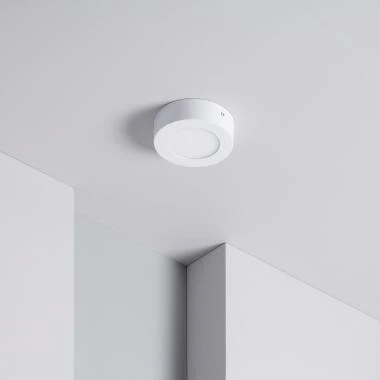
Essential
4,39 €
 (7)
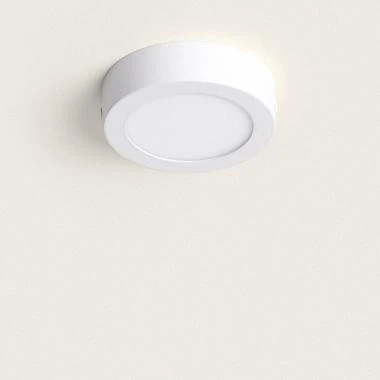
Advanced

5,99 €
(4)Ref 75547
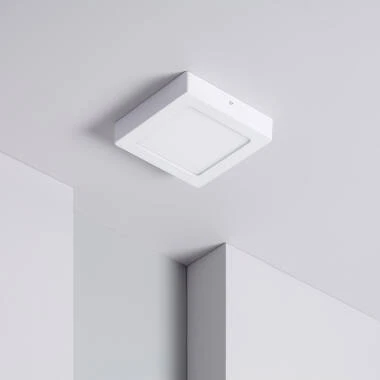
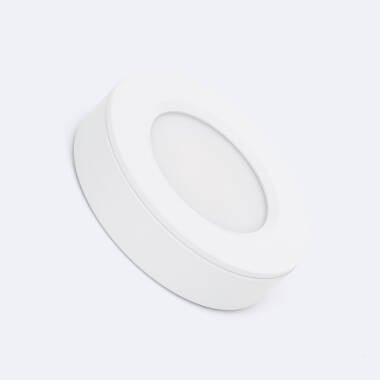
6W Round SuperSlim Selectable CCT LED Surface Panel Ø110 mm
Selectable (Warm - Cool - Daylight)
In Stock, delivery in 15-20 days
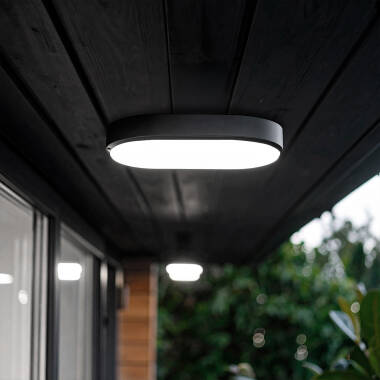
Essential
7,41 €
(7)Ref 77328
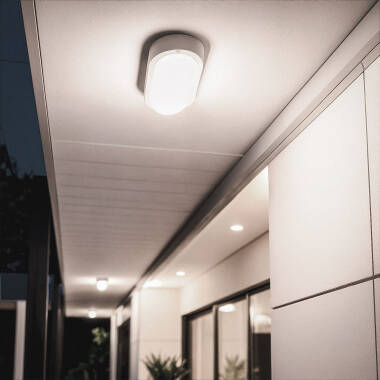
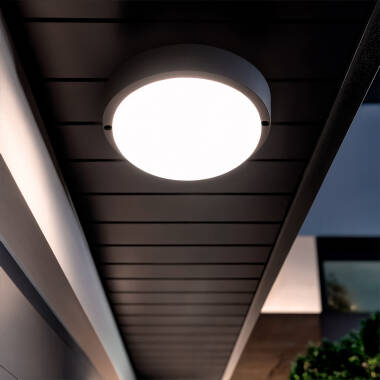
Black 15W Oval Hublot Outdoor LED Surface Panel IP65 85x173 mm
Daylight 6500K
In Stock, delivery in 15-20 days
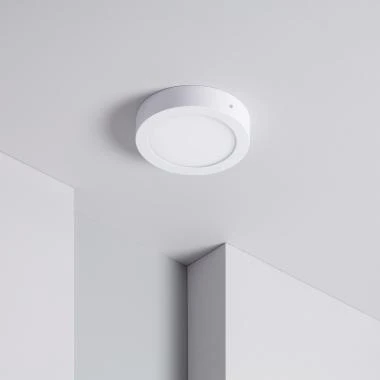
Essential
5,59 €
 (18)





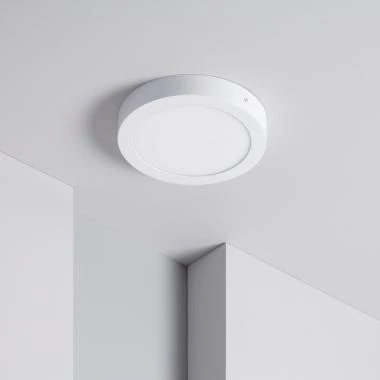
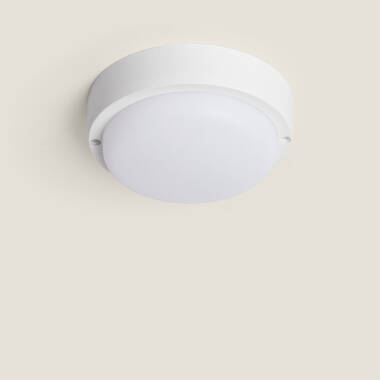
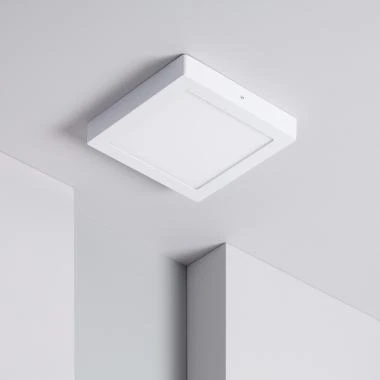
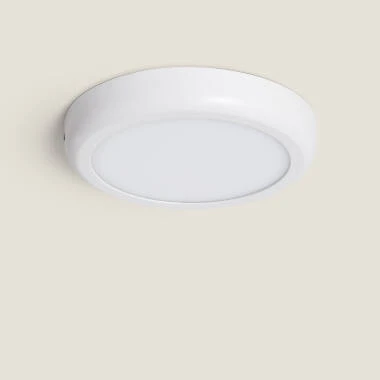



You may also be interested in
About LED Ceiling Lamps
LED ceiling lamps combine lighting and design in a single fitting, without requiring separate bulbs. Among ceiling lamps, models with integrated LEDs stand out for their low energy consumption, compact construction and the option to include features such as brightness adjustment or selectable colour temperature. They are a practical solution for anyone seeking functional, attractive lighting adapted to the needs of each space.
What Are Ceiling Lamps with Integrated LEDs?
Ceiling lamps with integrated LEDs incorporate the light-emitting diodes directly into their structure, together with the electronic components needed for operation. Unlike lamps with conventional bulb holders, they do not require replaceable bulbs.
This integration makes it possible to design fittings with shapes that would be difficult to achieve using traditional bulbs, such as illuminated rings, slim profiles, geometric structures or continuous illuminated surfaces.
Most operate using a driver that converts and regulates the electrical supply. The quality of this component, together with heat dissipation, directly affects light stability and the lifespan of the fitting as a whole.
Although integrated LEDs eliminate the need to replace bulbs regularly, it is worth checking whether the LED module or driver can be replaced in the event of a fault, especially in fittings intended for intensive use.
Advantages of LED Ceiling Lamps
Integrating LED technology makes it possible to optimise both energy consumption and light distribution. It also offers greater design freedom and makes it easier to incorporate control functions.
- Energy efficiency and low consumption: One of the main advantages of these fittings is their ability to produce a large amount of light using relatively little power.
- Durability and maintenance: Integrated LED lamps typically have a stated lifespan of between 25,000 and 50,000 hours, depending on their design and the quality of their components.
- Compact designs and uniform distribution: As they do not need bulb holders or space for conventional bulbs, integrated LED fittings can feature slim, circular, linear or geometric structures.
Types of LED Ceiling Lamps
Integrated LED lamps come in different configurations, from discreet models to large decorative structures. The shape of the fitting determines its visual impact and how the luminous flux is distributed.
- Circular and ring LED lamps: Circular models use illuminated rings or rounded structures to create a contemporary appearance.
- Linear and geometric LED lamps: Linear models incorporate LED strips or modules into elongated profiles, creating continuous illuminated surfaces.
- Surface-mounted and suspended LED lamps: Surface-mounted models attach directly to the ceiling, making them particularly practical in rooms with limited height. Suspended versions include cables or supports that allow the illuminated body to be positioned at a specific height.
How to Choose an LED Ceiling Lamp
The choice should take into account the size of the space, the amount of light required, colour temperature and dimming options. These factors determine visual comfort and the functionality of the installation.
Wattage, Lumens and Room Size
Electrical power, expressed in watts, indicates consumption, while lumens represent the amount of light emitted.
For a 15 m² room with a target of 200 lux, approximately 3,000 useful lumens are needed. The fitting's emitted luminous flux will need to be higher to compensate for losses associated with light distribution and the characteristics of the space.
It is therefore advisable to compare lamps according to their stated lumen output rather than wattage alone.
Colour Temperature and Colour Rendering
Colour temperatures between 2700 K and 3000 K provide warm white lighting suitable for bedrooms and living rooms.
Neutral white light at 4000 K is practical in kitchens, bathrooms and spaces used for tasks requiring good visibility.
It is also advisable to choose fittings with a colour rendering index (Ra) of at least 80. Models with Ra 90 or above allow the colours of textiles, furniture and finishes to be perceived more accurately.
Dimming and Selectable Colour Temperature
Some integrated LED lamps allow brightness adjustment, while others feature CCT systems for selecting different colour temperatures.
For example, a fitting may offer warm white light at 3000 K for relaxation and neutral white light at 4000 K for everyday activities.
Depending on the model, these functions can be controlled using a remote control, compatible switch or smart system.
It is important to check whether the lamp can be dimmed using an external dimmer or only through its built-in control system.
Applications of LED Ceiling Lamps
Integrated LED fittings can be adapted to rooms with different lighting requirements. Their wide range of designs combines efficiency, even light distribution and ease of use.
Living and Dining Rooms
In living rooms, LED lamps with rings or geometric structures can serve as both the main lighting source and a decorative feature.
General lighting of 150 to 300 lux usually provides a suitable base. In dining rooms, suspended models bring the light closer to the table and visually define the gathering area.
Bedrooms and Children's Rooms
In bedrooms, models with wide diffusers and warm white light provide pleasant lighting for relaxation and everyday activities.
Children's ceiling lamps with integrated LEDs can feature compact designs, brightness adjustment or different colour temperatures. These functions allow the lighting to be adapted for playtime, reading or rest.
For general lighting, approximate levels of 100 to 200 lux can be considered, supplemented by dedicated study lighting.
Kitchens and Work Areas
Kitchen ceiling lamps with integrated LEDs offer compact solutions for achieving even general lighting.
Kitchens may require between 300 and 500 lux on work surfaces. Linear or surface-mounted models distribute the light, although under-cabinet lighting is advisable where shadows fall on worktops.
A colour temperature of 4000 K is a common choice for these applications.
Bathrooms and Damp Areas
Bathroom ceiling lamps with integrated LEDs should be selected according to their location and exposure to water.
Bathroom ceiling lamps
IP44 models may be used in certain areas exposed to splashes, while areas close to showers or baths require checks of the applicable bathroom electrical zones and requirements.
LED integration allows compact designs with enclosed diffusers, although this alone does not guarantee protection against moisture.
Frequently Asked Questions About LED Ceiling Lamps
The main questions about these fittings concern their durability, maintenance, energy consumption and dimming options.
Can the LED in an Integrated LED Ceiling Lamp Be Replaced?
In some models, the LED module or driver can be replaced, while others are not designed to be dismantled or repaired. It is advisable to check the availability of replacement parts and the manufacturer's instructions before choosing the fitting.
How Long Does an Integrated LED Ceiling Lamp Last?
Many fittings have a stated lifespan of between 25,000 and 50,000 hours. If used for four hours a day, 25,000 hours equates to approximately 17 years of theoretical operation. The actual lifespan depends on temperature, electronics and installation conditions.
What Happens if an Integrated LED Lamp Stops Working?
The fault may be caused by the driver, LED module or an electrical connection. Some models allow individual components to be replaced, while others may require the entire fitting to be changed. Any work must be carried out with the power disconnected and in accordance with the manufacturer's instructions.
Are All LED Ceiling Lamps Dimmable?
No. Some have built-in dimming through a remote control or electronic system, while others only support switching on and off. To use a wall dimmer, the fitting must be explicitly stated as compatible with that system.
Do Integrated LED Lamps Use Less Energy Than Lamps with LED Bulbs?
Not necessarily. Consumption is determined by the power and efficiency of the complete system. A 30 W integrated LED lamp uses more electricity than another fitting equipped with three 6 W LED bulbs, although it may also provide a higher luminous flux.
To compare both options properly, consider the lumens emitted, total wattage and light distribution.